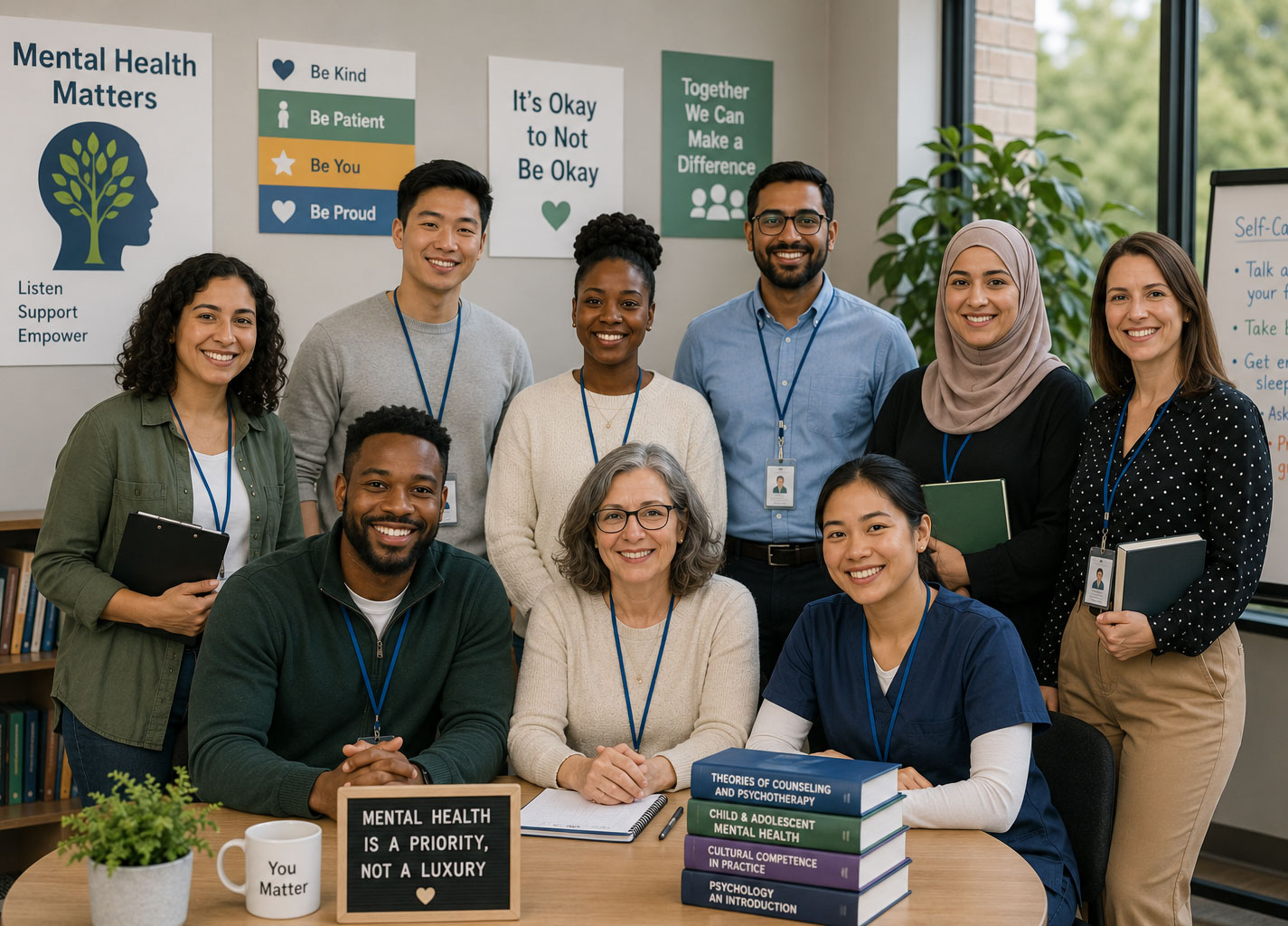
Cultivating Connection, Resilience, and Care in Human Services
Cynthia Aisha Meguid combines positive psychology, wellbeing, coaching, and practical facilitation to deliver training that is relevant, usable, and grounded in real-world practice. Rather than generic inspiration, our workshops focus on practical tools, staff confidence, and implementation in everyday work settings.
We understand that training only works when it is relevant to the team’s actual context, so every workshop is adapted to the organisation, audience, and desired outcomes.
Half-day workshops.
Full-day workshops.
Team development sessions.
Custom training for leadership teams.
Available across Sydney (Onsite & Online)
Why This Matters
Across mental health, school, university, and welfare settings, staff are often supporting people under stress, managing behavioural challenges, navigating complex systems, and balancing compassion with professional boundaries. These sectors also face growing workforce demand and rising pressure on staff wellbeing and retention.
Positive psychology training can help staff develop practical skills that support resilience, engagement, strengths-based practice, and sustainable care delivery, while coaching and reinforcement can improve transfer of learning into day-to-day work.
Who It’s For
This training is designed for teams in four core specialisations:
- Youth mental health organisations.
- Youth behaviour support practitioners.
- High school staff.
- University staff.
Each workshop is tailored to the audience, their workplace pressures, and the outcomes they need most.
Youth mental health teams are often working with young people experiencing anxiety, disengagement, emotional distress, identity challenges, family pressures, and social isolation. Staff need to balance compassionate support with boundaries, consistency, and psychologically informed practice in fast-moving environments.
Common problems
- Staff burnout and emotional fatigue.
- Inconsistent approaches across team members.
- Difficulty sustaining hope, motivation, and wellbeing under pressure.
- Limited practical tools for strengths-based engagement.
- Challenges supporting young people without becoming over-responsible for outcomes.
How Positive Psychology Training helps
- Builds staff resilience and emotional self-management.
- Strengthens strengths-based, hope-oriented support language.
- Improves engagement with young people through positive, relational practices.
- Helps teams normalise recovery, growth, and realistic progress.
- Supports psychologically safer team culture and better collaboration.
Workshop outcomes
- More confident and grounded staff.
- Better consistency in youth engagement.
- Stronger team wellbeing and morale.
- More practical tools for everyday work with young people.
Behaviour support practitioners work in highly relational and high-demand settings where they must respond to challenging behaviour while maintaining dignity, safety, and long-term developmental goals. These roles often require calm communication, emotional regulation, and a clear strengths-based framework.
Common problems
- Escalation cycles and reactive behaviour.
- Staff feeling stuck between empathy and boundaries.
- Difficulty maintaining consistency across settings and team members.
- Stress from repeated behavioural incidents.
- Limited confidence using positive, preventative strategies.
How Positive Psychology Training helps
- Teaches practical strengths-based approaches to behaviour support.
- Improves staff self-regulation and reflective practice.
- Supports preventative, relationship-first engagement.
- Reframes behaviour through needs, strengths, and capacity rather than defiance alone.
- Gives staff language and tools to reinforce progress and build trust.
Workshop outcomes
- Less reactive practice.
- More confident behavioural responses.
- Better staff consistency.
- Stronger focus on dignity, connection, and sustainable support.
High school staff are supporting students through academic pressure, identity development, social comparison, attendance issues, emotional distress, and behavioural challenges. Research suggests positive psychology approaches in schools can improve student wellbeing, happiness, and positive emotions, while also supporting a more flourishing school climate.
Common problems
- Staff fatigue and compassion overload.
- Student disengagement, low motivation, and escalating stress.
- Behaviour management that becomes repetitive and draining.
- Limited time to build positive classroom culture.
- Difficulty supporting wellbeing without adding to workload.
How Positive Psychology Training helps
- Equips staff with practical wellbeing strategies they can use immediately.
- Supports positive classroom and staff-student relationships.
- Builds confidence using strengths, gratitude, optimism, and hope-based approaches.
- Helps staff encourage student motivation and engagement.
- Reinforces wellbeing practices that can be embedded into daily routines.
Workshop outcomes
- More positive and resilient staff culture.
- Better staff confidence in supporting student wellbeing.
- Practical strategies for engagement and behaviour.
- Improved climate for learning and connection.
University staff are supporting young adults through academic stress, transition, loneliness, performance pressure, and uncertainty about future pathways. Positive psychology courses and interventions have shown promising effects for student wellbeing, and staff who understand these tools are better positioned to create supportive environments and refer students effectively.
Common problems
- Student stress, isolation, and disengagement.
- Staff managing high caseloads or support volume.
- Pressure to support wellbeing without clinical capacity.
- Limited time for proactive wellbeing initiatives.
- Difficulty connecting students to practical support early.
How Positive Psychology Training helps
- Gives staff practical wellbeing frameworks to share with students.
- Strengthens relational, early-intervention responses.
- Supports staff in building psychologically informed campus environments.
- Helps teams embed strengths-based communication and support.
- Improves confidence in promoting student wellbeing and resilience.
Workshop outcomes
- More responsive and wellbeing-informed staff.
- Better student engagement and referral pathways.
- Stronger campus culture and support language.
- Practical tools staff can use immediately.
Workshop themes
Workshops can be designed around your team’s needs, including:
- Strengths-based practice.
- Staff wellbeing and resilience.
- Positive psychology for frontline support.
- Emotional regulation under pressure.
- Building hope, motivation, and engagement.
- Relational communication and trust.
- Supporting behaviour through wellbeing-informed approaches.
- Creating psychologically safer teams and environments.

How It Works
A focused session designed around your team, delivered efficiently, and packed with practical strategies you can use right away.
Cynthia Aisha Meguid
Wellbeing Education Specialist | Workshop Facilitator
Aisha specialises in workplace wellbeing, performance, and behavioural change. She combines Positive Psychology and NLP to deliver engaging, practical workshops that create real, measurable improvements in teams. ● Practical, real-world approach ● Engaging and interactive delivery ● Immediate application of tools ● Proven results
Workshop Investment
Bundle Options
3 Workshops: 15% off | 6 Workshops: 25% off
Book a Tailored Staff Training Workshop Today
📩 support@aishameguid.com | info@aishameguid.com 📞 +61 466 568 918